
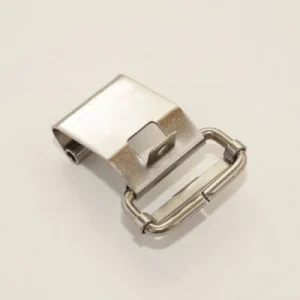
Over-centre toggle latches explained: how they work in practice
Over-centre toggle latches are widely used in industrial fastening systems where quick, secure, and repeatable clamping is required. But how do they actually work, and why are they preferred over conventional fastening methods?
Understanding the mechanics behind these latches helps engineers, fabricators, and maintenance teams select the correct solution for their application.
What is an over-centre toggle latch?
An over-centre toggle latch is a mechanical fastening device that uses a lever and pivot system to apply clamping force. Once engaged, the mechanism moves slightly past a central pivot point, locking the latch in place.
Why is this “over-centre” position important? It creates a self-locking effect that resists vibration and accidental release.
These latches are commonly used in:
- Enclosures and access panels
- Toolboxes and transport cases
- Industrial machinery covers
- HVAC systems
- Agricultural equipment
For a range of options, see these over-centre toggle latches.
How does the over-centre mechanism work?
The working principle is based on a simple mechanical concept: leverage combined with pivot geometry.
Step-by-step operation
- Initial engagement – The latch hook connects to a catch or striker.
- Lever movement – The user pulls the handle down, rotating the linkage arms.
- Approaching centre point – As the linkage aligns, resistance increases due to tension being applied.
- Passing over centre – The linkage moves slightly beyond its pivot alignment.
- Locked position – The mechanism stabilises, and tension is maintained without continuous force.
Why does this matter in real applications? Because once locked, the latch maintains pressure without loosening under vibration.
Key mechanical advantage
The over-centre action multiplies force, allowing a user to apply significant clamping pressure with minimal effort.
This makes it suitable for sealing enclosures, compressing gaskets, and securing movable panels.
Why are over-centre toggle latches so reliable?
Reliability comes from both design simplicity and mechanical geometry.
Self-locking behaviour
Once the latch passes the centre point, any external force actually reinforces the locked position rather than loosening it.
Is this useful in high-vibration environments? Yes, particularly in transport and machinery applications.
Consistent clamping force
Unlike threaded fasteners, toggle latches deliver repeatable tension every time they are closed.
This is important where sealing pressure must remain consistent or frequent access is required.
Minimal wear components
With fewer moving parts than complex locking systems, maintenance requirements are low.
Components of a latch system
A complete latch system includes more than just the latch body. Each part plays a role in performance.
Main components
- Latch body – contains the lever and linkage mechanism
- Hook or draw arm – connects to the catch
- Catch/striker – fixed point that the latch engages with
- Mounting plates – secure the components to surfaces
You can explore compatible latch system components to complete your setup.
Why is it important to match these components correctly? Mismatched parts can reduce clamping force or cause misalignment.
Types of over-centre toggle latches
Not all toggle latches are the same. Selection depends on load, environment, and application requirements.
Common variations
- Light-duty latches – suitable for small enclosures
- Medium-duty latches – used in general industrial applications
- Heavy-duty latches – designed for high load environments
- Adjustable latches – allow fine-tuning of clamping tension
- Lockable latches – include security features
How do you choose the correct type? Start by assessing load requirements and environmental exposure.
Where are these latches typically used?
Over-centre toggle latches are used across multiple industries because of their simplicity and effectiveness.
Industrial applications
- Manufacturing equipment
- Electrical enclosures
- Automotive and transport systems
- Agricultural machinery
- Storage and logistics cases
Environmental considerations in South Africa
- Dust and dirt exposure
- Temperature fluctuations
- Moisture and corrosion in coastal regions
Would a standard latch perform well in coastal areas? Only if corrosion-resistant materials are used.
Installation and alignment considerations
Correct installation directly affects performance.
Key installation points
- Ensure proper alignment between latch and striker
- Avoid excessive preload
- Mount on rigid surfaces
- Check for smooth operation
Why does alignment matter so much? Poor alignment increases wear and reduces effective clamping force.
Maintenance tips
- Inspect moving parts regularly
- Check mounting hardware
- Lubricate pivot points if required
Advantages over other fastening methods
Compared to bolts or screws, toggle latches offer several advantages.
- Quick release and fastening
- No tools required
- Repeatable clamping force
- Strong vibration resistance
- Reduced maintenance downtime
Is this always the best option? Not necessarily, but it is ideal for applications requiring frequent access.
Selecting the right latch for your application
Choosing the correct latch involves more than just size.
- Required clamping force
- Frequency of use
- Environmental exposure
- Material compatibility
- Safety requirements
Working with a supplier such as Venture Products ensures access to correctly specified components suited to industrial use.
Practical use cases in fabrication and maintenance
In real-world environments, toggle latches solve common problems efficiently.
- Securing removable machine guards
- Closing electrical cabinets
- Fastening transport crates
Why are they preferred? Because they reduce time spent opening and closing equipment while maintaining secure fastening.
Conclusion
Over-centre toggle latches provide a simple and effective solution for secure, repeatable fastening in industrial environments. Their self-locking mechanism, ease of use, and consistent clamping force make them suitable for a wide range of applications.
If you need a reliable fastening solution, consider specifying over-centre toggle latches suited to your requirements. For suitable options and configurations, it is worth consulting Venture Products to request a quote or make an enquiry.
Frequently Asked Questions
What is an over-centre toggle latch used for?
It is used to secure panels, lids, and enclosures where quick and repeatable fastening is required.
How does an over-centre mechanism prevent loosening?
Once the linkage passes the centre point, forces act to keep the latch closed rather than opening it.
Can toggle latches handle vibration?
Yes, they are designed to resist loosening under vibration when correctly installed.
What materials are toggle latches made from?
They are typically made from steel or stainless steel, often with protective coatings.
Do I need a specific catch for each latch?
Yes, matching components ensures correct alignment and clamping force.
Are adjustable toggle latches better?
They are useful where tension needs to be fine-tuned.
Can these latches be used outdoors?
Yes, but corrosion-resistant materials should be selected.