
 Why palisade fence rail selection affects the whole fence
 Why palisade fence rail selection affects the whole fence
Palisade fence rails form the horizontal structure that supports the vertical pales and helps the fence resist bending, impact, and tampering. When buyers search for palisade fence rails, they are usually trying to compare steel size, wall thickness, rail length, spike format, and supplier options before placing an order.
Why does this matter before a fence is even installed? A rail that is too light for the site may bend under pressure, while a rail that is stronger than required may add unnecessary cost to a low-risk perimeter. The right choice depends on the risk level, fence height, span spacing, corrosion exposure, and installation method.
For fabricators and procurement teams, the decision is also practical. Rail length affects the number of joints, cutting work, handling time, and alignment accuracy. Venture Products supplies security components suited to these types of perimeter applications, including palisade rail options used in residential, commercial, and light-industrial fencing work.
A good specification should not only ask whether the rail fits the fence. It should ask whether the rail supports the intended service life, installation method, and maintenance plan.
Palisade fence rails: 7 practical checks before ordering
Before selecting palisade fence rails, it helps to work through a clear checklist. What should be checked before a purchase order is sent?
1. Confirm the box-section size
The supplied palisade rail options use a 40mm × 40mm mild-steel box section. This square profile provides a practical balance between strength, weldability, and ease of installation. It also gives fabricators a consistent surface for drilling, welding, and aligning vertical pales.
A box section is commonly chosen where the rail must resist twisting better than a flat strip or light channel. For perimeter security work, the rail needs enough rigidity to keep pales in line and reduce movement over time.
2. Match wall thickness to the risk level
Wall thickness has a direct effect on strength and resistance to deformation. A 2 mm wall may suit residential, estate, and light-industrial applications where the fence needs reliable support without excessive material cost.
A 3 mm wall is more suitable where added rigidity is required. Would a boundary near a public road, yard, service entrance, or higher-risk industrial site benefit from the heavier rail? In many cases, the added steel thickness can reduce bending risk and improve long-term performance.
3. Choose the correct rail length
Rail length affects installation efficiency. A 1.8 m rail may suit medium-height perimeter sections, replacement work, or projects where shorter handling lengths are easier on site. A 2 m rail may reduce the number of joints and speed up installation on longer runs.
The best option depends on post spacing, transport, handling, and site access. Longer rails can save time, but only if the installation layout supports them properly.
4. Check the spike format
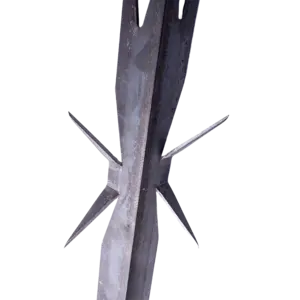
The supplied options use a seven-spike format. Spikes are part of the deterrent value of palisade security fencing, but they also need to be consistent in shape and spacing.
Why should procurement teams check this detail? Inconsistent spikes can affect the visual line of the fence and may complicate matching when rails are used for repairs or extensions.
5. Plan for drilling and fixing
Some projects require standard hole patterns, while others need custom drilling to match existing posts or brackets. If hole positions are not confirmed early, installers may lose time correcting fitment issues on site.
For replacement work, measure the existing fence carefully. Hole centres, post spacing, rail height, and bracket type should be confirmed before ordering.
6. Decide on coating requirements
Mild steel needs a suitable finish for the environment. In dry inland areas, a basic protective coating may be enough if the fence is inspected and maintained. In areas with moisture, pollution, irrigation spray, or coastal exposure, stronger corrosion protection may be required.
Should coating be decided after installation? Usually not. It is better to decide early, especially where galvanising, painting, or project-specific finishing is required.
7. Consider long-term maintenance
Palisade fencing is often chosen because it is visible, repairable, and difficult to climb when correctly installed. The rail still needs inspection over time. Look for bent sections, coating damage, rust at joints, loose fixings, and movement around posts.
A rail that is easier to inspect and replace can reduce downtime for maintenance teams. This is especially useful on commercial and industrial sites where perimeter access must remain controlled.
Comparing 2 mm and 3 mm palisade fence rails
The choice between 2 mm and 3 mm palisade fence rails should be based on site risk, budget, and expected load. Is the fence mainly a visual and physical boundary, or does it need stronger resistance against forced movement?
A 2 mm wall can be a practical choice where the site has normal security requirements and the fence is supported by suitable posts and brackets. It can also help manage project cost where long perimeter runs are involved.
Available 2 mm options include the Palisade Fence Rail 40mm × 40mm × 2 mm – 7 Spike – 1.8 m and the Palisade Fence Rail 40mm × 40mm × 2 mm – 7 Spike – 2 m. These suit projects where the specification calls for a 40mm box section with a lighter wall thickness.
A 3 mm wall should be considered where a stronger rail is required. This may include higher-risk boundaries, industrial yards, public-facing perimeters, or areas where the fence may be exposed to impact or repeated pressure.
Available 3 mm options include the Palisade Fence Rail 40mm × 40mm × 3 mm – 7 Spike – 1.8 m and the Palisade Fence Rail 40mm × 40mm × 3 mm – 7 Spike – 2 m. These are better suited to applications where added rigidity is part of the buying decision.
Matching rail length to site layout
Rail length is sometimes treated as a simple stock choice, but it affects labour and installation accuracy. Would fewer joints improve the finished fence line on a long perimeter?
A 2 m rail can reduce joint count where the post spacing and fence layout allow it. Fewer joints may mean quicker alignment, fewer connection points, and less cutting on straight runs.
A 1.8 m rail may be easier to transport, handle, and position on smaller sites. It can also be useful for repairs, shorter fence sections, or areas where access is restricted.
Installers should confirm the actual centre-to-centre post spacing before ordering. Even a small mismatch can create extra cutting, drilling, and welding work. On larger jobs, this can affect both cost and completion time.
South African site conditions and corrosion planning
South African sites vary widely, from dry inland industrial areas to wet coastal environments. How exposed will the fence be to moisture, heat, dust, pollution, or garden irrigation?
Mild-steel palisade rails should be finished according to their exposure. Where moisture is present, untreated steel can corrode faster, especially around welds, holes, cut ends, and damaged coating areas.
Maintenance teams should inspect the fence at planned intervals. Practical checks include:
- coating damage around fixings and joints
- early rust marks on cut edges
- movement at brackets or posts
- bent rails after attempted entry or impact
- loose or missing fasteners
Cost-awareness is important, but the cheapest rail is not always the lowest-cost option over time. A suitable rail thickness, finish, and installation method can reduce repair frequency and help extend the useful life of the fence.
How buyers should specify palisade fence rails
A clear specification reduces ordering errors. What information should be included so the supplier and installer are working from the same requirement?
At minimum, buyers should confirm:
- rail length
- box-section size
- wall thickness
- number of spikes
- material
- drilling requirements
- coating or finish requirements
- delivery quantity
- whether the work is for a new fence or repair
Where the project involves a security upgrade, the specification should also consider the risk level of the site. A school, warehouse, factory yard, residential complex, and municipal facility may all require different strength, finish, and budget decisions.
It is also worth checking related Security Products when the fence forms part of a wider access-control or perimeter-hardware requirement.
Conclusion
Palisade fence rails should be selected according to strength, length, wall thickness, finish, and installation needs. A 40mm × 40mm mild-steel rail with seven spikes can be used across many security fencing applications, but the correct 2 mm or 3 mm wall thickness depends on the risk level and site conditions.
For buyers and fabricators, the most practical approach is to confirm the site layout, post spacing, drilling requirements, and corrosion exposure before ordering. For help selecting the correct palisade fence rails for a project, contact Venture Products to make an enquiry.
FAQs
What are palisade fence rails used for?
Palisade fence rails support the vertical pales and help form the horizontal structure of a palisade security fence. They assist with alignment, rigidity, and resistance to movement.
Are 2 mm palisade fence rails strong enough?
A 2 mm wall can be suitable for many residential, commercial, and light-industrial applications. The final decision depends on fence height, post spacing, site risk, fixing method, and maintenance requirements.
When should I choose 3 mm palisade fence rails?
A 3 mm wall is better suited to higher-risk sites where added rigidity is required. It may be appropriate for industrial yards, public-facing boundaries, service areas, or locations where the fence may be exposed to impact or tampering.
Is a 1.8 m or 2 m palisade rail better?
Neither length is automatically better. A 2 m rail can reduce joint count on longer runs, while a 1.8 m rail may be easier to handle, transport, and use in shorter sections or repair work.
Do mild-steel palisade rails need coating?
Yes, mild steel should receive a suitable protective finish for the site conditions. Coating requirements depend on exposure to moisture, pollution, irrigation, coastal air, and expected maintenance intervals.
Can palisade fence rails be drilled to suit a project?
Drilling requirements should be confirmed before ordering. Custom drilling may be needed where rails must match existing posts, brackets, or specific installation layouts.
What should I check before ordering palisade fence rails?
Confirm the rail size, wall thickness, length, spike format, material, hole pattern, coating requirement, and quantity. For repair work, also measure the existing fence carefully before ordering.