
 Common toggle latch design mistakes that cause failure
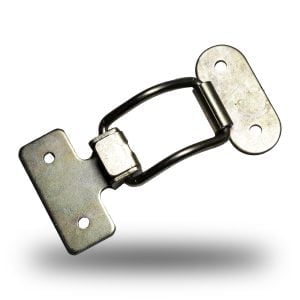 Common toggle latch design mistakes that cause failure
Toggle latch design mistakes are a frequent cause of poor performance, premature wear, and failure in industrial applications. Many issues only become visible after installation, when correcting them is costly and time-consuming.
Why do these problems occur so often? In most cases, it comes down to incorrect assumptions about load, alignment, or how toggle latch mechanisms actually function in real-world conditions.
Understanding these mistakes early allows engineers and fabricators to avoid rework and ensure reliable fastening from the start.
Incorrect alignment between latch and striker
One of the most common problems is poor alignment between the latch and the striker. Even a small offset can significantly affect performance.
Why does alignment matter so much? Because toggle latches rely on precise geometry to achieve proper over-centre locking.
Typical alignment issues
- Horizontal misalignment causing uneven loading
- Vertical offset reducing clamping force
- Angular misalignment leading to premature wear
When alignment is incorrect, the latch may still close, but it will not achieve optimal tension. Over time, this leads to fatigue and failure.
Correct alignment ensures smooth engagement and consistent clamping force across repeated use.
Over-tightening and excessive preload
Applying too much preload is another common mistake. While it may seem that more tension equals better security, this is not always true.
What happens when a latch is over-tightened? The mechanism experiences unnecessary stress, which can deform components, increase wear on pivot points, and make operation difficult or unsafe.
In adjustable designs, preload should be set to achieve secure closure without forcing the mechanism beyond its intended range.
Using the wrong latch for the load
Selecting a latch without considering load requirements often results in failure under real operating conditions.
Is a light-duty latch suitable for industrial machinery? In most cases, no.
Common selection errors
- Underestimating dynamic loads
- Ignoring vibration or shock forces
- Using general-purpose latches in heavy-duty applications
Each application requires a latch that matches both static and dynamic loads. This includes considering how frequently the latch will be operated.
Ignoring vibration and movement
In many industrial environments, vibration is unavoidable. However, it is often overlooked during design.
Why is vibration such a problem? Because repeated movement can gradually loosen poorly specified or incorrectly installed latches.
Effects of vibration
- Loss of clamping force
- Gradual misalignment
- Accelerated wear
Properly designed toggle latch mechanisms use the over-centre principle to resist loosening. However, this only works if the latch is correctly specified and installed.
Poor material selection for the environment
Material choice plays a critical role in long-term performance.
What happens if the wrong material is used? Corrosion, fatigue, and failure can occur, especially in demanding environments.
South African conditions to consider
- Coastal areas with high salt exposure
- High temperatures in industrial settings
- Dust and abrasive particles
In these conditions, corrosion-resistant finishes or materials should be specified to maintain performance over time.
Incorrect mounting surface or structure
A latch is only as strong as the surface it is mounted on. Weak or flexible mounting surfaces reduce effectiveness.
Why is this often overlooked? Because focus is placed on the latch itself rather than the full system.
Common mounting issues
- Thin panels that flex under load
- Inadequate fasteners
- Poor surface preparation
A rigid mounting structure ensures that the clamping force is properly transferred and maintained.
Failure to consider tolerance and adjustment
Manufacturing tolerances can affect how well a latch performs once installed.
What happens when tolerances are ignored? The latch may not close correctly or may apply inconsistent pressure.
Key considerations
- Variation in panel thickness
- Thermal expansion
- Wear over time
Adjustable latches can compensate for these variations, making them suitable for applications where precision cannot be guaranteed.
Not understanding how toggle latch mechanisms work
A fundamental issue is lack of understanding of the mechanism itself.
If the over-centre principle is not properly understood, design decisions may be based on incorrect assumptions.
For a deeper explanation, refer to how over-centre toggle latches work.
Why is this knowledge critical? Because correct design depends on understanding how force is applied and maintained.
Using mismatched components
A latch system includes multiple components that must work together.
What happens if they are mismatched? Poor engagement, reduced clamping force, or complete failure.
Key components to match
- Latch body
- Hook or draw arm
- Catch or striker
Using compatible toggle latch mechanisms ensures proper fit and performance.
Overlooking maintenance and inspection
Even well-designed systems require periodic inspection.
Why is maintenance often neglected? Because toggle latches are considered simple and reliable.
Recommended checks
- Inspect for wear on pivot points
- Check alignment over time
- Ensure fasteners remain secure
Regular maintenance helps prevent unexpected failure and extends service life.
Practical approach to avoiding design mistakes
Avoiding these issues requires a systematic approach.
Key steps
- Define load and environmental requirements
- Select appropriate latch type and material
- Ensure correct alignment and mounting
- Allow for adjustment and tolerance
- Plan for maintenance
Working with a supplier such as Venture Products helps ensure that components are correctly specified for the intended application.
Conclusion
Common toggle latch design mistakes often result from incorrect assumptions rather than complex technical challenges. Issues such as misalignment, incorrect preload, and poor material selection can significantly reduce performance and lifespan.
By understanding how toggle latch mechanisms function and applying proper design principles, engineers and fabricators can avoid costly errors. For reliable solutions and properly matched components, it is worth consulting Venture Products to request a quote or make an enquiry.
Frequently Asked Questions
What are the most common toggle latch design mistakes?
Misalignment, incorrect preload, poor material selection, and using the wrong latch for the load are the most common issues.
How do I know if my latch is misaligned?
Signs include uneven closing, reduced clamping force, or visible wear on one side of the mechanism.
Can over-tightening damage a toggle latch?
Yes, excessive preload can deform components and increase wear.
What type of latch should I use for high vibration?
A properly specified over-centre latch designed for vibration resistance is recommended.
Do I need adjustable latches?
Adjustable latches are useful where tolerances or material thickness may vary.
How often should toggle latches be inspected?
Inspection frequency depends on usage, but regular checks are recommended in industrial environments.
Can I mix and match latch components?
It is not recommended, as mismatched components can lead to poor performance or failure.