
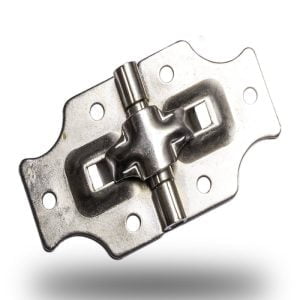
 What Makes a Toggle Latch “Heavy-Duty”? This question often arises when specifying fastening systems for demanding industrial environments. Not all toggle latches are designed for the same level of stress, and selecting the wrong type can lead to failure, downtime, or safety concerns.
A heavy-duty toggle latch is not defined by appearance alone. It is determined by mechanical strength, material construction, and performance under load. How can engineers and procurement teams identify the correct option for their application?
Understanding the Definition of “Heavy-Duty”
What does “heavy-duty” actually mean in a fastening context? The term refers to a latch designed to handle higher loads, resist deformation, and maintain performance under repeated use.
Heavy-duty toggle latches are typically used in industrial enclosures, transport containers, machinery access panels, and equipment exposed to vibration. The key distinction lies in the latch’s ability to maintain clamping force without failure over time.
For a broader overview of selection criteria, refer to choosing the right toggle latch.
Load Capacity and Mechanical Strength
How much force can the latch withstand before failure? Load capacity is one of the primary indicators of a heavy-duty latch.
Heavy-duty designs provide higher clamping force, greater resistance to deformation, and improved performance under dynamic loads. These characteristics are critical in applications where vibration or movement is present.
- Higher clamping force for secure closure
- Resistance to bending under load
- Performance under vibration and impact
- Consistency over repeated cycles
Load requirements should account for both static and dynamic conditions. Selecting from heavy-duty toggle latches ensures the correct specification for demanding applications.
Material Construction and Durability
What materials are used in the latch, and how do they affect performance? Heavy-duty latches are typically manufactured from thicker gauge metals or corrosion-resistant materials.
Material selection directly influences durability, particularly in harsh environments. In South Africa, exposure to heat, dust, and humidity can accelerate wear and corrosion.
- Thicker steel sections for strength
- Stainless steel for corrosion resistance
- Protective coatings for extended service life
Choosing the correct material ensures that the latch performs reliably under both environmental and operational stress.
Design Features That Improve Strength
What design elements contribute to a latch being classified as heavy-duty? Beyond materials, the geometry and mechanism play a critical role.
Heavy-duty latches often include reinforced base plates, stronger pivot points, and robust handle designs. These features help distribute load evenly and reduce stress on individual components.
- Reinforced handles and mounting plates
- Durable pivot pins and hinges
- Over-centre locking mechanisms
These design features ensure consistent clamping force and reduce the likelihood of failure under load.
Resistance to Vibration and Repeated Use
Will the latch be exposed to continuous movement or frequent operation? Heavy-duty latches are designed to withstand repeated cycles without losing performance.
In industrial machinery and transport equipment, vibration is constant. The latch must remain secure without loosening or opening unintentionally.
Why is this critical? A latch that fails under vibration can compromise both safety and equipment integrity. Selecting a stable locking mechanism reduces this risk significantly.
Installation and Application Fit
How well does the latch integrate with the system? Even a heavy-duty latch will underperform if installation is incorrect.
Proper alignment between the latch and striker ensures that clamping force is applied evenly. Poor installation can lead to increased wear and reduced effectiveness.
- Correct alignment with striker components
- Strong mounting surfaces
- Access for maintenance and adjustment
Correct installation ensures long-term reliability and consistent operation.
Cost vs Performance in Industrial Environments
Is it worth investing in a heavy-duty latch when lighter options are available? The answer depends on long-term operational requirements.
Lower-cost latches may meet initial requirements but often fail under repeated stress. This results in downtime, maintenance costs, and potential safety risks.
Venture Products provides fastening solutions designed for practical industrial use. Selecting a durable latch reduces long-term costs and improves operational reliability.
Conclusion
What Makes a Toggle Latch “Heavy-Duty”? It is defined by load capacity, material strength, design integrity, and performance under real-world conditions.
Understanding these factors allows engineers and procurement teams to make informed decisions that reduce failure risk and improve equipment reliability.
For assistance in selecting the correct latch for your application, Venture Products can provide guidance. Enquire to discuss your requirements.
FAQs
What is the main difference between standard and heavy-duty toggle latches?
Heavy-duty latches are designed to handle higher loads and resist wear under demanding conditions.
How do I determine if my application requires a heavy-duty latch?
If the application involves high loads, vibration, or frequent use, a heavy-duty latch is recommended.
Are heavy-duty toggle latches always corrosion resistant?
Not always. Corrosion resistance depends on the material and protective finish used.
Can heavy-duty toggle latches be used outdoors?
Yes, provided the material is suitable for environmental exposure such as moisture or coastal conditions.
Do heavy-duty latches require maintenance?
Maintenance is minimal, but periodic inspection helps ensure continued performance.
Can I replace an existing latch with a heavy-duty version?
Yes, as long as mounting dimensions and load requirements are compatible.